


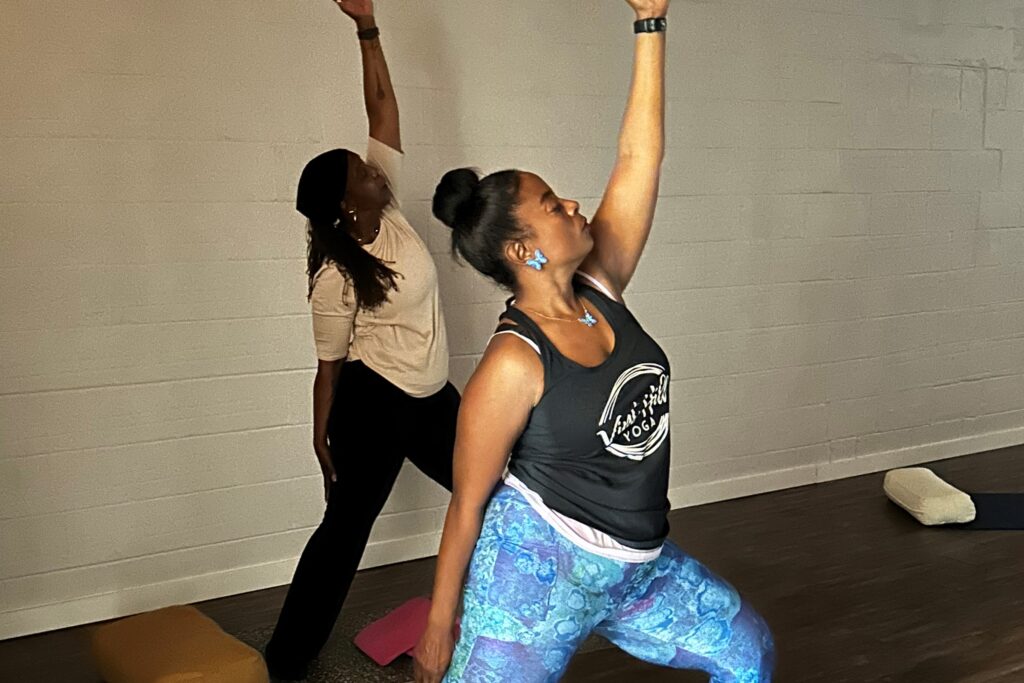
If you’ve ever thought “I’m not flexible enough,” “I’m too old,” or “I need to get in shape first,” you’re not alone. Yoga classes are often misunderstood, and those myths keep so many people from experiencing the stress relief, strength, mobility, and emotional balance yoga actually offers.
Here’s the truth: yoga isn’t about touching your toes or twisting into impossible shapes. It’s about meeting your body where it is—and letting it evolve from there.
Yoga Classes Aren’t Just for Flexible People
One of the biggest misconceptions about yoga classes is that flexibility is a requirement rather than a result.
You Gain Flexibility through Yoga
Flexibility develops gradually as you practice yoga regularly. Every pose can be modified, supported, or adapted, making yoga accessible to beginners and seasoned movers alike.
Many students start yoga feeling stiff, tight, or limited. Over time, they notice improved range of motion, less joint pain, and better posture—without forcing their bodies.
Strength Matters More Than Stretch
Yoga builds functional strength, especially in the core, hips, legs, and shoulders. Strength creates stability, and stability allows flexibility to grow safely.
You Don’t Need to Be “In Shape” to Start Yoga Classes
Another common myth is that yoga classes are only for people who are already fit.
Yoga Is a Starting Point, Not a Finish Line
Yoga meets you at your current fitness level. Whether you’re returning to movement after an injury, managing chronic pain, or easing back into exercise, yoga provides a low-impact, adaptable option.
You don’t need endurance, balance, or strength before your first class. Those qualities are built during your practice.
Yoga Supports Longevity and Everyday Movement
Unlike workouts focused solely on intensity, yoga emphasizes joint health, balance, and mobility—key components for long-term wellness.
Yoga Classes Are for Every Age and Body
Many people assume yoga is only for young, bendy bodies. That couldn’t be further from the truth.
Yoga Grows With You
Yoga can be gentle or challenging, slow or dynamic. Classes can be tailored for older adults, beginners, athletes, or those recovering from surgery or injury.
The goal isn’t to look a certain way—it’s to move, breathe, and feel better in your own body.
You Don’t Have to Be Calm or Spiritual to Enjoy Yoga
Some people avoid yoga classes because they worry they won’t “do it right” or won’t connect with the mindfulness side.
Yoga Is Practical, Not Performative
Yoga helps regulate stress, improve sleep, and support mental clarity—even if your mind wanders or your balance wobbles.
You don’t need to chant, meditate perfectly, or feel instantly relaxed. Showing up and breathing is enough.
Why Yoga Classes Are About Progress, Not Perfection
Yoga isn’t a competition, and it’s not about comparison.
Each class is an opportunity to listen to your body, build awareness, and move with intention. Some days will feel strong. Others will feel quiet. Both are valuable.
FAQs About Yoga Classes
Do I need to be flexible before starting yoga classes?
No. Flexibility develops as you practice. Yoga classes are designed to support all starting points.
Are yoga classes good for beginners?
Yes. Beginner-friendly yoga classes focus on foundational poses, breathing, and modifications to keep you safe and comfortable.
Can yoga classes help with stress and anxiety?
Absolutely. Yoga supports the nervous system through breathwork, movement, and mindful awareness.
What should I expect in my first yoga class?
You can expect guided movement, options for different ability levels, and encouragement to move at your own pace.
Are yoga classes effective for strength and balance?
Yes. Yoga builds full-body strength, improves balance, and supports joint stability over time.
Final Thought
The biggest myth about yoga is that you need to change before you start. In reality, yoga classes are designed to help you change because you started.
You don’t need to be flexible. You don’t need to be fit. You just need to be willing to show up—exactly as you are.